


LJL FVL-2
- Dec 19, 2021
- 3 min read
Reflection
Fundamentals of visual language 2 aimed at further understanding visual elements such as color, surface, silhouette, etc. that make up a form. We were each assigned an organic form to study and represent using a variety of media.
The organic forms (vegetables & fruits) were kept in close proximity to better understand the object's form through sensory experiences.

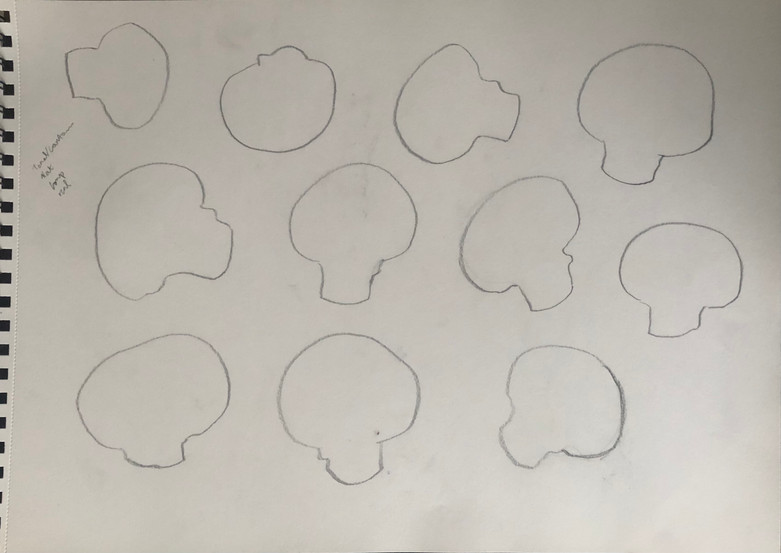


[Slide 1] Observing my organic form; white button mushroom and doing multiple rapid drawings of its contours helped me better understand its basic silhouette.
[Slide 2&3] Starting with just black and white colors using charcoal;
hardening the lines at the edges where shadow falls gave definition to the form and made the areas where light fell appear more clear.
charcoal as a media gave a soft texture to the surface and went in hand with the smooth/fleshy skin of the cap.
applying in rough patches and lines at the margins helped in showing the wrinkle lines seen on the actual mushroom.
blending at certain parts of the margin shows reflecting light from the bottom hitting the edges of the margin.

The use of soft pastels further softened the surface texture, especially around the cap and brought it closer to the appearance of mushrooms.
Limiting the colors to black and white during charcoal drawing helped me understand where light usually fell on the form before introducing color into the image with soft pastels and oil pastels.


Representing the mushroom in line drawings using a wet medium;
Textures observed on the surface could be more accurately represented.
With sepia watercolor, I was able to draw finer details on the surface and understand different textures present each on the surfaces of stem, cap and gills.

After introducing colors extracted from the mushroom with wet medium, variation in colors in the surface textures and interior parts such as in the gills could be brought.


Conclusion
For techniques in using wet media, I struggled with applying watercolor with good amount of concentration. My habit of diluting the color and fear of messing the light tones of the mushroom on its exterior made it hard for the textures I was painting to show up.
To try and work around it, when applying pigmented colors I started from areas that I can confidently fill in with colors like dark brown to test out.
Mentors also demonstrated some line drawings and filling areas of shade where I had applied too light.
I learned that simply lining specific areas/edges where shade falls can define the textures there, also bring more contrast where light and shade falls.
I was also made aware of details in my assigned organic form such as
- multiple types of textures are present on the small surface of a mushroom.
- The cap of the white button mushroom is more spherical form than what I had always assumed as umbrella-like or hemisphere. It appears umbrella-like only when vertically half-cut because of the space the gills inside occupy.
- Button mushrooms are often closed at its margins and the gills inside aren't exposed at the underside of the cap.
Lastly, I think the process of this project is useful in gaining understanding of form and nature of an object. Drawing contour lines and contour with glaze paper helped built my basic understanding of its silhouette and proportions of the object, drawing and shading with just black and white brings focus on how light is interacting with the object's surface.


Comments